





Turmeric in depth: grow, heal, cook and dye

If you love herbs that earn their keep in both the garden and the kitchen, turmeric is hard to beat. We have turmeric plants available, as well as dried turmeric (chips and powder) ready to use.
Let's take a good look at this popular herb.
In this article:
Growing conditions | When to harvest | History | Culinary uses | Medicinal uses | Contraindications | How to take turmeric | Turmeric paste recipe | How to make turmeric powder | Natural dye | In the garden
Botanical name: Curcuma longa
Family: Zingiberaceae (ginger family)
Other names: Indian saffron, yellow ginger, yellow root, curcuma, haldi (Hindi), kurkum (Arabic and Hebrew).
In other languages: French: curcuma (also: safran des Indes), Spanish: curcuma, German: Kurkuma (also: Gelbwurz), Italian: curcuma, Dutch: kurkuma, Polish: kurkuma, Romanian: curcuma, Russian: kurkuma, Finnish: maustekurkuma, Norwegian: gurkemeie, Danish: gurkemeje, Czech: kurkuma.
Origin
Turmeric is native to India and parts of South Asia, with India (and neighbouring regions) being major producers of dried turmeric.
Description
Turmeric is a perennial plant in the ginger family with long, strappy tropical leaves that can grow to around 1 metre. It produces attractive creamy-white flowers on upright spikes (often up to 20 cm long). While it's a lovely ornamental plant, turmeric is traditionally grown for its rhizomes - chunky, knot-like "roots" that are bright orange inside, with smaller side shoots often called "fingers".
Growing conditions
Turmeric is a sub-tropical plant that prefers warmth, roughly 20-30°C, while actively growing.
Climate: Grows well in tropical and warmer temperate parts of Australia. In cooler areas it usually dies back over winter and returns when the weather warms. In our garden in southeast Queensland, it usually dies back mid winter, then shoots away again in November. It won't tolerate frost, so in cold regions it's best in a container that can be protected.
Don't give up on it! When turmeric goes dormant the leaves die right back and it can look like the plant is gone. Many people pull it out thinking it's dead, but the rhizomes are just resting underground. Leave them alone, reduce watering, and they will shoot again when the warm weather returns.
Light: Light shade is ideal, but it will tolerate a fair bit of sun. Too much shade can reduce rhizome yield.
Water: Keep plants well-watered during active growth. Turmeric naturally grows in regions with high seasonal rainfall, so consistent moisture matters. When it is dormant, reduce watering substantially as the rhizomes will rot if kept wet.
Soil: Needs well-drained, loamy, fertile soil. Enriching soil with compost improves growth.
Propagation: Turmeric is commonly propagated by dividing clumps and replanting rhizomes. Rhizomes are typically ready to harvest at around 10 months, and if you want reliable flowering, you often leave a clump undug for at least 12 months.
When to harvest turmeric

Rhizomes are typically ready to harvest at around 10 months from planting.The best time to harvest is when the leaves die back, so winter time. But you can harvest all year - whenever you need it, even when it is dormant or actively growing, just dig up some of the older rhizomes. If you want to dig a fair amount to make powder, it is best to do it when the leaves start to die back. Always leave some in the ground to ensure a continuous supply, and if you want reliable flowering, you need to leave a clump undug for at least 12 months.
Storing fresh turmeric

Cool airy spot
After digging fresh turmeric can be keep in a cool dry spot for a couple of months or more.
- Shake off the soil and lay in a shallow box in a single layer and leave for 3-6 days until the skins are completely dry.
- Then store unwashed in a shallow box or crate lined with paper.
- Keep in a cool dark place with good airflow.
- Check every week and remove any soft or mouldy bits.
In the Fridge
Turmeric can last up to 6 weeks in the fridge
- Brush off soil, wash, then dry well
- Wrap in paper towel, place in a loosely closed bag/container in the crisper.
- Replace the paper towel if it gets damp.
In the Freezer
This is the easiest and most convenient way to store fresh turmeric rhizomes and will keep for months.
- Scrub clean, dry well
- Store them whole in a container or freezer bags. Grate from frozen as needed.
- Or slice/grate/blend first and freeze in small portions.
Turmeric powder

Making turmeric powder is another good way of making the most of fresh turmeric. It is convenient to store and use as a powder, and it is not too difficult to make.
How to make turmeric powder from fresh rhizomes
We boil fresh turmeric before drying because it helps the rhizomes dry more evenly, improves colour, removes that raw earthy smell, and gives a better quality powder.
- Wash rhizomes well with a brush.
- Place in a saucepan and cover with water.
- Simmer gently about 45-60 minutes, or until tender.
- Drain, cool, and slice thinly.
- Dry until hard and brittle (dehydrator, low oven, or clean airy sun-drying).
- Grind (mortar and pestle, coffee grinder, or blender).
- Store airtight in a dark container in a cool cupboard.
Note: Turmeric leaves yellow stains. Cover benches and wear an apron and gloves.
History and ethnobotanical uses
Turmeric has deep cultural significance in India and is still used in weddings and religious ceremonies. In parts of India (including the Bengali region), turmeric paste is traditionally used in pre-wedding rituals. In medieval Europe, turmeric was nicknamed "Indian saffron" because it was used as a more affordable alternative to saffron for colour.
Culinary uses
 Turmeric is used widely in cooking for both colour and flavour. It's well known for the golden-yellow hue in many Indian dishes. The flavour is earthy and slightly bitter, with a mildly pungent aroma.
Rhizome
Fresh rhizome: Grate and cook with onions to use in curries, soups, dhal and vegetable dishes. Grate fresh into smoothies, dressings and marinades. Thinly sliced fresh rhizomes make a delish and colourful addition to pickles.
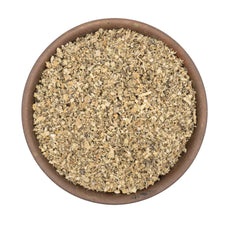
Dried turmeric chips: Simmer into soups, broths, curries, or teas, then strain out. Our dried turmeric chips are perfect for this.
Powder: So easy to keep on hand and use every day, in curries, rice, roast vegetables, spice rubs, eggs, dips, smoothies and pastes. Our organic turmeric powder is a kitchen staple.
My favourite base for curries includes turmeric, fennel, cumin, coriander and chilli and it is excellent in my pumpkin and chickpea curry.
Leaves
We use the fragrant turmeric leaves to wrap small pieces of fish and/or vegetables before cooking on the BBQ or in the steamer.
The leaves also add a subtle aroma and can be placed in rice while cooking, then removed before serving.
Young leaves can be sliced thinly and used in salads or cooked in stir-fries. Older leaves are tougher and stringier, best left for wrapping.
Flowers
The bracts around the flower can be pulled off the flower stem and used in stir-fries and salads.
Medicinal uses
Turmeric has a long history of traditional use in Ayurvedic and Chinese herbal traditions, particularly relating to digestion, skin applications, and general inflammatory states. Modern research has focused on compounds such as curcumin and antioxidants, and it has become a very popular medicinal herb.
Joint pain and inflammation
The anti-inflammatory action of curcumin inhibits certain enzymes that are the primary drivers of joint destruction and pain. It also reduces the activity of enzymes that break down articular cartilage, which cushions the joints.
Support for minor wounds and skin problems
Its antimicrobial properties help fight acne-causing bacteria, while its ability to stimulate collagen production and reduce inflammation speeds up the healing of wounds and skin irritation. Topical use in paste and ointments. Internal use is also helpful.
Digestive health
Turmeric aids digestive health by acting as a mucosal protective agent, strengthening the intestinal barrier to prevent leaky gut. Its anti-inflammatory actions help reduce the frequency of flare-ups in conditions like ulcerative colitis by calming the immune response in the gut lining.
Liver health
Curcumin stimulates the production of bile to help break down fats and enhances the activity of natural antioxidant enzymes like glutathione, which the liver uses to neutralise and flush out toxins. It also acts as a hepatoprotective agent, shielding liver cells from damage caused by toxins, alcohol, or excess fat.
Heart health
Curcumin supports heart health by improving endothelial function, which is the ability of the blood vessel lining to relax and regulate blood pressure. It also works as a lipid-modulator by reducing the oxidation of LDL cholesterol, preventing the formation of arterial plaques (atherosclerosis).
Mental health and brain function
Curcumin exerts an antidepressant effect by increasing levels of Brain-Derived Neurotrophic Factor (BDNF), a protein that helps grow and repair brain cells. It also acts as a neurotransmitter modulator, helping
to maintain healthy levels of serotonin and dopamine. While human trials are still ongoing, curcumin shows promise for Alzheimer's and Parkinson's by acting as a neuroprotective agent. It helps clear toxic protein clumps, such as amyloid plaques and alpha-synuclein, while reducing the chronic inflammation and oxidative stress that damage nerve cells.
Metabolic health and diabetes
Curcumin serves as an insulin sensitiser, helping the body's cells respond more effectively to insulin and move sugar out of the bloodstream more efficiently. It also functions as a glycemic regulator by reducing the liver's production of excess glucose. By activating a "metabolic master switch" called AMPK, curcumin stimulates energy use in the muscles and helps reduce the chronic inflammation in fat tissue that often leads to weight-related metabolic issues.
Cancer prevention and supportive care
Curcumin acts as a multi-targeted anti-cancer agent by interfering with several signalling pathways (like NF-kB and STAT3) that regulate cancer cell growth, survival, and spread. It has been shown in laboratory studies to promote apoptosis (programmed cell death) in various cancer cell types and may act as a chemosensitiser, making some traditional chemotherapy and radiation treatments more effective.
CAUTION: Because curcumin can interfere with certain chemotherapy drugs (like cyclophosphamide) or act as a blood thinner, patients in active treatment need to consult their oncologist before adding it to their regimen.
Contraindications
Turmeric used in normal food quantities is generally well tolerated, but medicinal-level doses need more care.
Diabetes medications: Turmeric may lower blood sugar, and combined with medications could increase the risk of hypoglycaemia. Monitor use along with your health care provider.
Blood thinners / surgery: Turmeric can affect clotting in some people; stop high-dose use well before surgery and check with your health care provider if you're on anticoagulants/antiplatelets.
Gallstones or bile duct obstruction: Seek medical advice before medicinal dosing.
Pregnancy and breastfeeding: Avoid high-dose turmeric supplements; culinary amounts are usually considered safe.
How to take turmeric
Turmeric can be made into a tincture 1:2 with 60% alcohol and dose 2-4ml 3 times a day.
Turmeric can be taken as a dried powder, mixing 1 tsp (3g) with milk or butter or ghee or coconut oil and some black pepper approx 1/4 tsp. The usual dose for medicinal use is 3 times a day.
Capsules (size 00) filled with turmeric powder - take two capsules 3 times a day.
You can make a paste and keep it in the fridge. See recipe below.
Doses can vary, depending on the individual, so always speak to your health care provider first.

Turmeric paste recipe
Ingredients
1 cup water
1/2 cup turmeric powder
2 tsp freshly ground black pepper
1/3 cup coconut oil
Method
In a small saucepan, combine the water and turmeric powder. Bring to the boil, then reduce to a gentle simmer for about 7 minutes, stirring often.
If it starts to stick, add a splash more water. You're aiming for a thick paste.
Remove from the heat and allow to cool slightly.
Stir in the black pepper and coconut oil until well combined.
Spoon into a clean glass jar and refrigerate for up to 10 days.
How to use it
Stir through salad dressings.
Add to porridge or yoghurt.
For a quick drink: add a heaped teaspoon to a cup of hot water or warm milk. Sweeten with a little honey and/or add cinnamon to taste.
Note: Turmeric leaves yellow stains. Cover benches and wear gloves.
Why the black pepper and fat
For better absorption, curcumin should be consumed with black pepper (which contains piperine) and a source of fat.
Natural dye

Turmeric rhizome gives strong yellow to gold tones on fabric. Use natural fibres like cotton, linen, silk, and wool.
- Use 2-4 tablespoons turmeric powder per 1 litre of water.
- Heat to a gentle simmer for around 15 minutes.
- Then add prewashed wet fabric.
- Keep temperature 60-80°C for 20-45 minutes, stirring gently for even colour.
- Let it cool in the pot for deeper colour, then rinse until water runs mostly clear.
- Wash with a gentle soap and hang in the shade to dry.
Note: Turmeric-dyed fabric will fade over time.
Turmeric in the garden

Turmeric isn't just a "useful plant"; it's a genuinely attractive foliage plant.
Tropical layering: Use turmeric as a mid-storey feature with other lush plants (gingers, cannas, heliconias, coleus, taro, bromeliads). Its upright leaves add structure.
Edible garden: It looks right at home in a productive garden mixed with lemongrass, chillies, basil, galangal and other leafy greens, practical and beautiful together.
Pots: A large pot of turmeric makes a lush green statement on a patio or near the kitchen door.
Seasonal note: In cooler areas, it will die back in winter, so pair it with plants that carry the bed through the cooler months.
Shop turmeric
If you'd like to grow your own, check out our turmeric plants in the nursery.
If you're after instant kitchen convenience, we also have dried turmeric chips and organic turmeric powder available.
Turmeric is part of the ginger family, so if you're planting turmeric you might also like to grow ginger and galangal alongside it.
Warm regards,
Sandra

