




Japanese Indigo
Japanese Indigo
Drawn from the same file the laser uses, so this is exactly what you get.

Usually available: September to March
Life cycle: Annual
Height: 1m
Position: Sun / Part shade
Soil preference: Moist / well drained
This is how we pack and send your Herb Plants to all states except TAS & WA
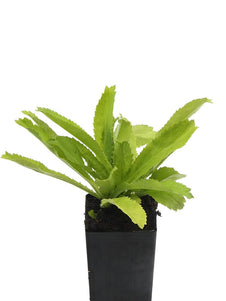
You will receive
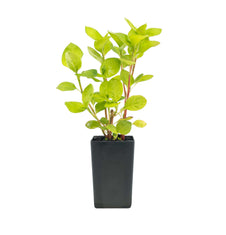
- 1 Japanese Indigo Herb Plant in a 50 X 75mm tube - General growing instructions
All of our Herb Plants are grown organically with certified organic potting mixes and fertilisers
Botanical Name: Persicaria tinctoria
Japanese indigo has been grown across East Asia for centuries as a primary source of the famous indigo blue dye. In Japan it’s associated with the aizome tradition, where leaves are fermented into “sukumo” to create deep, colourfast blues for textiles.
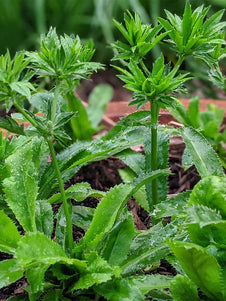
Upright, branching habit, typically 60–100 cm tall. Lance-shaped green leaves (some forms with reddish tones). Small, pinkish flower spikes in summer and autumn. Fast-growing and lush when well watered.
Growing Conditions
Japanese indigo thrives in warm, humid weather and rich, well-drained soil. It prefers a sunny position but tolerates light afternoon shade in hot districts. Soil should be friable and high in organic matter; consistent moisture is important, as plants wilt if allowed to dry out, but they dislike waterlogging. In coastal SE QLD it grows from spring to late autumn; elsewhere, wait until frost has passed. Mulch to keep roots cool and moisture even. Tip-prune young plants to encourage a dense, leafy canopy. Space 30–40 cm apart; mature plants reach about 60–100 cm tall.
Best treated as an annual, though in frost-free spots it may behave as a short-lived perennial if cut back after flowering. Propagate easily from seed once soils are warm (sow shallow and keep evenly moist), or from softwood cuttings in late spring–summer. Plants will reshoot after leafy harvests, and may self-seed lightly if flowers are left to set. Minimal maintenance beyond regular watering, occasional feeds (compost/seaweed), and periodic trimming to keep plants bushy.
Uses as a Dye
Primarily a dye plant, the leaves contain indican, which produces teal greens to indigo blues.
For fresh leaf dyeing on silk and wool, it gives soft aqua/teal tones.
Fermented (sukumo) vat dyeing gives deeper, wash-fast indigo blues on cotton, linen wool and silk.
Harvest for use 6-8 weeks after planting, before or just as buds form. Morning harvest gives the highest colour.
In the Garden
Lush, tropical foliage and airy pink flowers suit cottage and dye gardens. The flowers attract beneficial insects.
Our shipping costs are a flat rate, meaning you can add any amount of products to your order and you will pay the same.
Express Post - $12.95
Plants are sent via Express Post only.
Dispatch days: Monday and Tuesday only.
We can send plants to Queensland, New South Wales, Victoria, South Australia and ACT.
We cannot send plants to Western Australia, Northern Territory or Tasmania due to restrictions.
*Subject to actual conditions. Find out more on our Delivery information page.
We want you to be thrilled with your purchase from us. If you are not satisfied with an item and need to return it, we're here to help.
If you are unhappy with the quality of herb plants, they must be photographed on the day of receiving and emailed to us within 24 hours.
Find out more about our Returns & Refunds.