








Mint - Mountain Mint
Mint - Mountain Mint

Drawn from the same file the laser uses, so this is exactly what you get.

Usually available: All year
Life cycle: Perennial
Height: 60 - 90cm
Position: Full sun / part shade
Soil preference: Moist / well drained
This is how we pack and send your Herb Plants
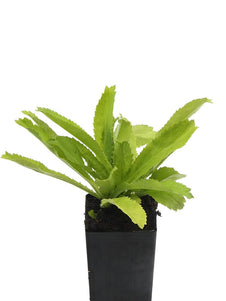
You will receive
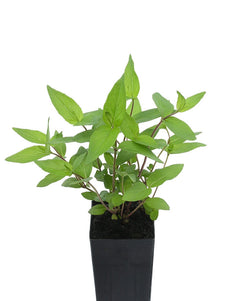
- 1 Mountain Mint Herb Plant in a 50 X 75mm tube - General growing instructions
All of our Herb Plants are grown organically with certified organic potting mixes and fertilizers
Botanical Name: Pycnanthemum muticum
- Outstanding pollinator plant — ranked #1 for pollinator visits in a university study of 86 plant species
- 2025 Perennial Plant of the Year — awarded by the Perennial Plant Association (USA)
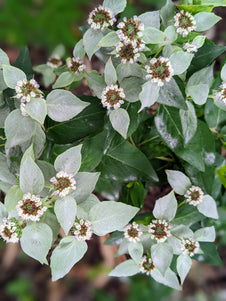
- Striking silvery-white bracts give the plant a frosted, snow-dusted appearance through summer
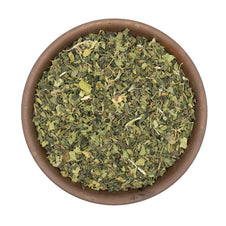
- Strong spearmint fragrance — edible leaves can be used fresh or dried in teas and cooking
- Natural insect repellent — rub fresh leaves on clothing to help deter mosquitoes and biting insects
- Low maintenance — frost tolerant, pest and disease free, suits a wide range of Australian climates
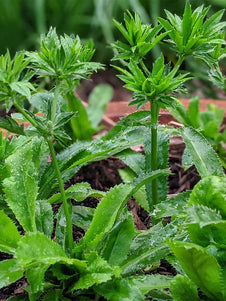
Mountain Mint is a clump-forming, aromatic herbaceous perennial growing to 60 - 90cm tall with a similar spread. It has the typical square stems of the Lamiaceae (Mint) family and an upright, bushy habit. The broad, ovate leaves are 4 - 7cm long with toothed edges, attached directly to the stem. They are dark green towards the base of the plant and become progressively paler and silvery toward the top as the plant grows. All parts of the foliage have a strong, pleasant spearmint-like fragrance when crushed.
The standout feature of this plant is its striking silvery-white bracts that surround dense clusters of tiny, tubular, pink to white flowers. These showy bracts give the whole plant a frosted, snow-dusted appearance that is highly ornamental. The flowering period is from mid-summer to early autumn (July to September), during which time the plant becomes a magnet for pollinators. A Penn State University study comparing 86 native plant species found that Mountain Mint attracted the most pollinator visits and the most diverse group of pollinators, including bees, butterflies, wasps and beneficial flies.
Mountain Mint is not a true mint as it is not in the Genus Mentha, however it belongs to the Lamiaceae family, also known as the Mint Family. Interestingly, Pycnanthemum is more closely related to Monarda (Bergamot) than to true mints, but it also shares family ties with Oregano, Marjoram and Savoury. The genus name Pycnanthemum comes from the Greek words pyknos (dense) and anthos (flower), referring to the densely packed flower clusters. The species name muticum means "blunt" in botanical Latin. It may also be known by the synonym Koellia mutica. Common names include Clustered Mountain Mint, Short-toothed Mountain Mint, Blunt Mountain Mint and Broad-leaved Mountain Mint. It was named the 2025 Perennial Plant of the Year by the Perennial Plant Association (PPA) in the United States.
Despite its common name, Mountain Mint does not actually grow in the mountains. It is native to the eastern United States, from Maine and Michigan south to Florida and Texas, where it is typically found growing in moist open woodlands, meadows, fields and thickets. The plant was first described scientifically by the French botanist André Michaux in 1803. Several Native American groups traditionally used various Pycnanthemum species, and it has a long history of cultural and herbal significance in its native range.
Growing Conditions
Mountain Mint grows best in full sun to part shade, with the best flowering occurring in full sun positions. It prefers moist, well-drained soils and is less drought tolerant than some other members of its genus. Once established, it will handle short dry periods, but consistent moisture will keep it looking its best. It tolerates a range of soil types including sandy, loamy and clay soils, with a preference for slightly acidic to neutral pH.
This plant is a vigorous grower that spreads by underground rhizomes, though it is not as aggressive as true mints (Mentha). To keep it in check, simply prune the roots in spring with a spade, or grow in a container. Any new runners are easily pulled out. Mountain Mint pairs well with other assertive growers like Bergamot, Echinacea and ornamental grasses that will hold their ground alongside it.
Mountain Mint is frost tolerant, making it suitable for a wide range of Australian climates including frost-prone areas. It has no serious pest or disease problems. Propagation is by division in spring or by seed.
Traditional Herbal Uses
Mountain Mint has a history of traditional herbal use among Native American groups and early American herbalists. A refreshing, minty tea was traditionally brewed from the fresh or dried leaves and was used as a digestive aid, particularly for indigestion, colic, flatulence and stomach discomfort. The tea was also traditionally taken for coughs, colds, chills and fevers, and as a general tonic. Crushed flowers were traditionally applied directly to ease toothache.
The essential oil of Pycnanthemum muticum contains compounds including pulegone, menthone, menthol and limonene. One of the most popular traditional uses for this plant is as a natural insect repellent — the fresh leaves can be rubbed onto clothing to help deter biting insects such as mosquitoes, ticks and gnats.
Important Safety Note: Pycnanthemum muticum contains notable levels of pulegone in its essential oils. While the plant is generally considered safe when used externally (such as rubbing leaves on clothing as an insect repellent), pulegone can be harmful to the liver in concentrated or large doses if consumed internally. Any internal use (such as tea) should be moderate and occasional. Pregnant women should avoid this plant. Always consult a healthcare professional before using any herb medicinally.
Culinary Uses
The edible leaves have a pleasantly strong, spearmint-like aroma and flavour. They can be used fresh or dried as a mint substitute in cooking, and all aerial parts of the plant are edible. The leaves and flowers make a refreshing herbal tea. Due to the pulegone content mentioned above, culinary use should be occasional rather than daily, and portions should be moderate.
Other Uses
Mountain Mint is one of the most valuable pollinator plants available for the garden. It is an exceptional addition to butterfly gardens, pollinator gardens and native-style plantings. The fresh leaves make an effective natural insect repellent when rubbed on clothing. The silvery bracts and flower clusters are also highly ornamental and can be used in fresh or dried arrangements.
All information provided on this website is for informational purposes only. Please seek professional advice before commencing any treatment.
Our shipping costs are a flat rate, meaning you can add any amount of products to your order and you will pay the same.
Express Post - $12.95
Plants are sent via Express Post only.
Dispatch days: Monday and Tuesday only.
We can send plants to Queensland, New South Wales, Victoria, South Australia and ACT.
We cannot send plants to Western Australia, Northern Territory or Tasmania due to restrictions.
*Subject to actual conditions. Find out more on our Delivery information page.
We want you to be thrilled with your purchase from us. If you are not satisfied with an item and need to return it, we're here to help.
If you are unhappy with the quality of herb plants, they must be photographed on the day of receiving and emailed to us within 24 hours.
Find out more about our Returns & Refunds.