




Carob, Ceratonia siliqua, is an evergreen tree from the Mediterranean, slow growing, drought hardy and famously long lived. It carries dark, sweet pods that have fed people for thousands of years, and it makes a naturally caffeine-free stand-in for cocoa. We have a few carob trees in our own garden, and they have given us a lasting soft spot for this generous old tree.
An old friend of the Mediterranean
When Michael and I visited family in Croatia a few years ago, we found the little fishing town of Komiža on the island of Vis full of carob trees, many of them hundreds of years old and loaded with pods. The locals eat the ripe pods straight from the tree in autumn, and the shops sell a local carob brandy with a chocolatey aftertaste. We bought a bottle to try.
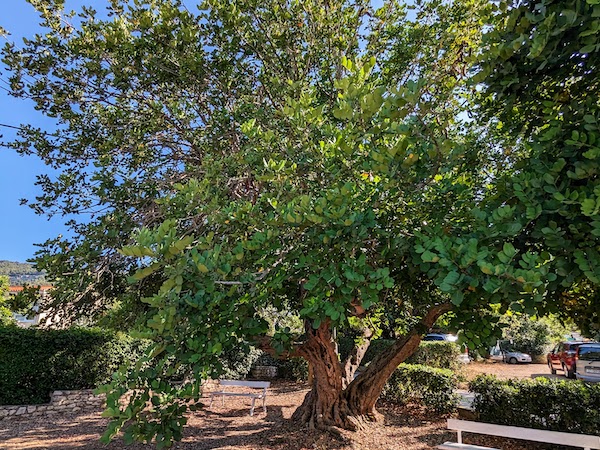
Carob trees are typically medium sized, reaching 10 to 15 metres, with dense evergreen foliage and, in the older trees, wonderfully twisted and gnarled trunks. They make excellent shade trees, and they shrug off drought, poor soil and salty air, which is why they are such a feature of Mediterranean landscapes. The pods take a full year to develop, starting green and turning dark brown when fully ripe.
St John's bread and carats of gold
Carob has been feeding people for a very long time. It is sometimes called St John's bread, after the story that it sustained Saint John in the desert. It fed pyramid builders and Roman legions on long sea voyages, because the pods keep so well and need no preparation at all.
And our favourite piece of carob lore: the word carat, the unit jewellers still use for gold and gemstones, comes from the carob seed. The hard little seeds are so consistent in weight that for centuries they were the standard for weighing gold.
Why we love carob
Carob earns its place in the pantry on flavour alone, but it has a few honest virtues worth knowing:
- Naturally sweet. The pod is sweet all on its own, so carob drinks and treats often need little or no added sugar.
- Naturally caffeine free. Unlike cocoa, carob contains no caffeine or theobromine, which makes a warm carob cup a lovely evening drink, and one the kids can share without anyone bouncing off the walls at bedtime.
- Naturally high in fibre. The pod is mostly fibre and natural sugars, which is part of why it kept travellers going for centuries.
- Safe for dogs. That same lack of caffeine and theobromine is why carob is the classic dog-safe chocolate alternative.
How to make your own carob powder
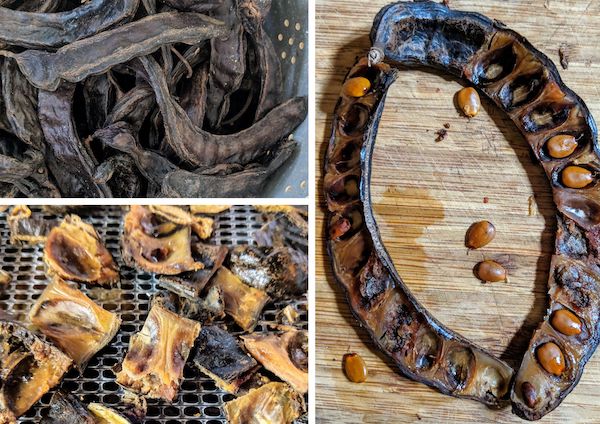
If you have a carob tree, you can turn the ripe pods into powder at home:
- Harvest the mature pods from your tree. They should be dark brown and snap easily.
- Rinse the pods, put them into a large saucepan, and cover with water.
- Soften the pods so the hard seeds can be removed easily. For raw carob, soak the pods in the water overnight. For a quicker method, simmer them for about 15 minutes, until they open easily.
- Slice the pods lengthways along the edge, remove the seeds and compost them.
- Chop the pods into pieces and dry them completely in a dehydrator or a very slow oven.
- Blend or grind the dried pieces in a high speed blender or coffee grinder.
- Sift through a mesh strainer for an even powder, and store in a well sealed glass jar in a cool spot.
Two easy carob recipes
Warm carob cup
- Warm a mug of milk (dairy or oat both work well) in a small saucepan.
- Whisk in 2 heaped teaspoons of carob powder and a pinch of cinnamon.
- Sweeten with a little honey if you like, though carob's own sweetness is usually enough.
- Lovely by the fire on a cold night.
Carob bliss balls
A sweet little after-dinner treat.
- 1 cup pitted dates, soaked in warm water for 10 minutes and drained
- 1 cup almonds or mixed nuts
- 3 tablespoons carob powder, plus extra for rolling
- Half a cup of desiccated coconut, plus extra for rolling
- A pinch of salt
Blitz the nuts in a food processor until coarsely ground. Add the dates, carob powder, coconut and salt, and process until the mix holds together when pressed. Roll into balls, then roll in extra coconut or carob powder. Keep in the fridge for up to two weeks, if they last that long.
No tree? No trouble
We sell carob two ways in the dried herb room, both certified organic: Carob Powder Roasted, smooth and full bodied for drinks and baking, and our Australian grown Carob Kibble, the roasted pod broken into naturally sweet pieces for nibbling, trail mixes and simmering in milk. And because carob contains no caffeine or theobromine, unlike chocolate, carob treats are the classic dog-safe alternative.

