







Rehmannia Root (Prepared)
Rehmannia Root (Prepared)
- Allow 7 to 14 days


Country of Origin may differ from what is shown above.
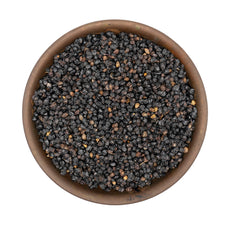
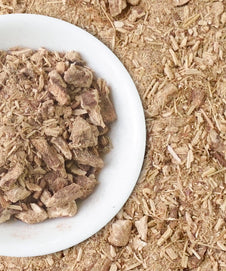
Prepared rehmannia root is Rehmannia glutinosa that has been steamed and dried over and over until it turns black, soft and sticky, with a rich sweetness closer to prunes than to a herb. In Chinese herbal tradition the raw root and the prepared root are counted as two different herbs, and this is the prepared one, shu di huang. It is simmered into decoctions, almost always as part of a formula.
Key Benefits
- Prepared, not raw: steamed with rice wine and dried again and again, traditionally nine times over, until it is dark right through.
- Sweet and rich: one of the few herbs that makes a bitter formula easier to drink rather than harder.
- A cornerstone of classical formulas: the chief herb in some of the best known blood-building blends in Chinese herbal tradition.
- Long used as a restorative: traditionally taken in formulas for tiredness, low reserves and general depletion.
- Cut for decoction: sticky slices sized for a long, slow simmer.
- Practitioner staple: mostly bought by herbalists and students working from a formula.
Use roughly 6 to 12 g of the cut root per serve. Cover it with cold water, bring it gently up to a simmer and hold it there for 30 to 45 minutes, then strain. It is sticky, so a stir partway through stops the slices clumping on the bottom of the pot.
Rehmannia root is rarely taken alone. It is most often simmered with Dong Quai Root in blood-building formulas, and with Astragalus Root in restorative ones. If the richness sits heavily, the old trick is to simmer a slice of Ginger Root alongside it.
The traditional preparation is nine steamings and nine dryings, the root going from pale beige to glossy black over the course of it. That processing is the whole difference between shu di huang and the raw root, which is used quite differently.
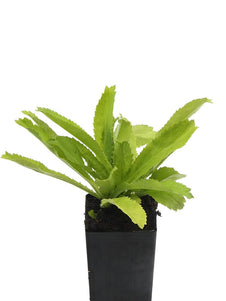
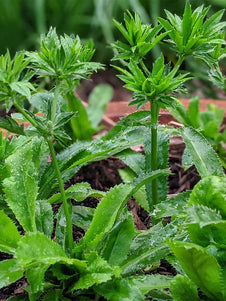
Its old English name is Chinese foxglove, after the tubular purple flowers. It is no relation to true foxglove and carries none of its compounds.
Keep it in an airtight jar away from heat. The slices are naturally sticky and will draw moisture out of a humid summer if you let them.
Rich and moistening, so it can bring on bloating or loose stools if your digestion is delicate. Start with a small amount. This information is not a substitute for medical advice. Consult a healthcare provider before use, especially if pregnant, breastfeeding, or taking medication.
Our shipping costs are a flat rate, meaning you can add any amount of products to your order and you will pay the same.
Regular Post - $10.95
Express Post - $12.95
Dispatch days: Monday to Thursday.
We send Australia wide.
*Subject to actual conditions. Find out more on our Delivery information page.
We want you to be thrilled with your purchase from us. If you are not satisfied with an item and need to return it, we're here to help.
Find out more about our Returns & Refunds.


